HVAC is the worst-kept secret in trades: the customer who calls you doesn't call back. They call the next company on Google. By the time your voicemail catches up Monday morning, the heating tech from the shop on Route 18 has already been there, replaced the inducer motor for $1,400, and signed a maintenance contract.
The math is brutal because the calls cluster around weather events. A weekend cold snap in February. The first 90-degree day in June. A power outage on a Thursday night. These are exactly the windows when nobody's at the desk and the customer's pain is highest, which means their decision threshold is lowest. They will hire whoever picks up.
What I'd build for an HVAC shop.
Three pieces. The first is the workhorse. The other two come up later.
1. After-hours AI receptionist with dispatch routing
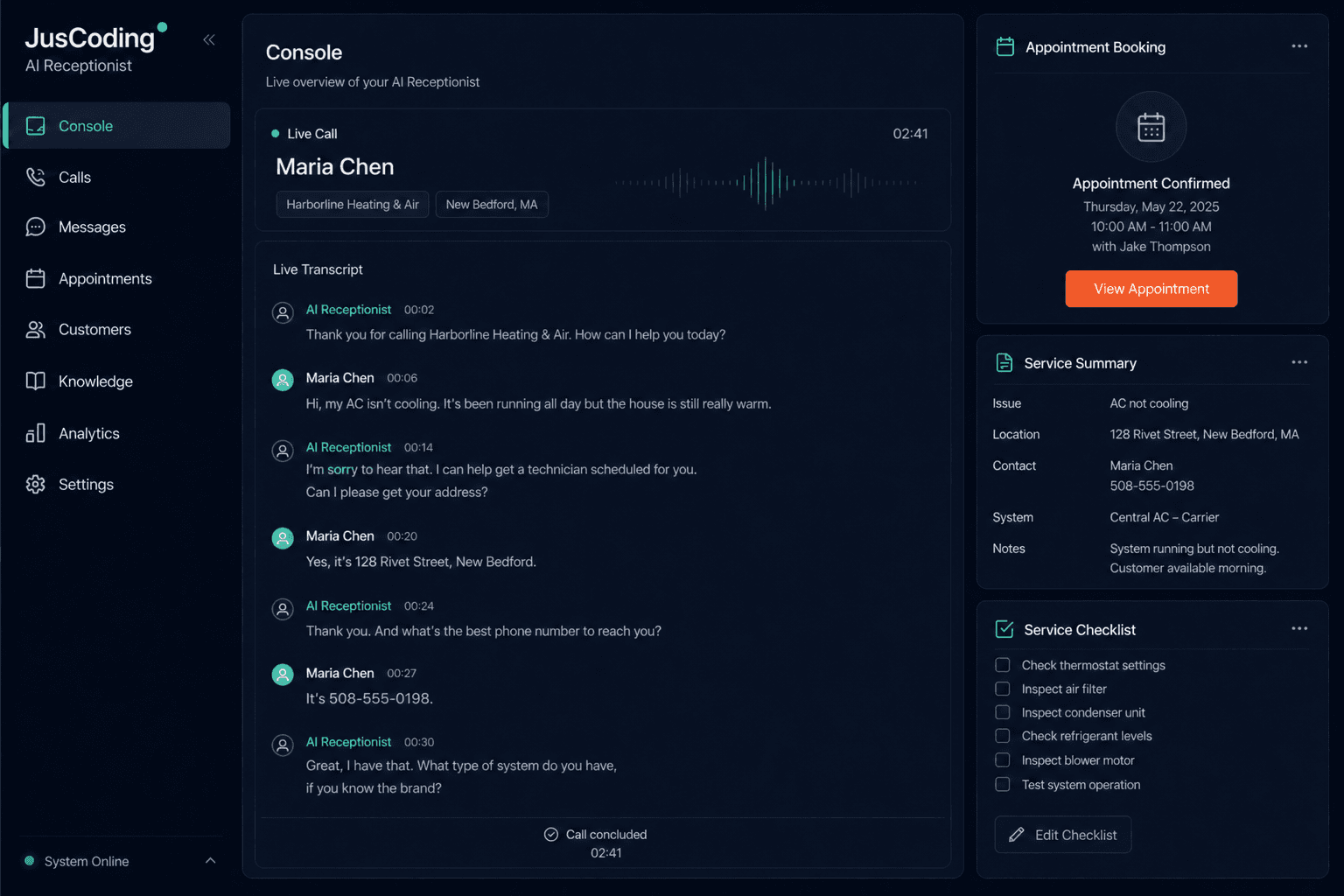
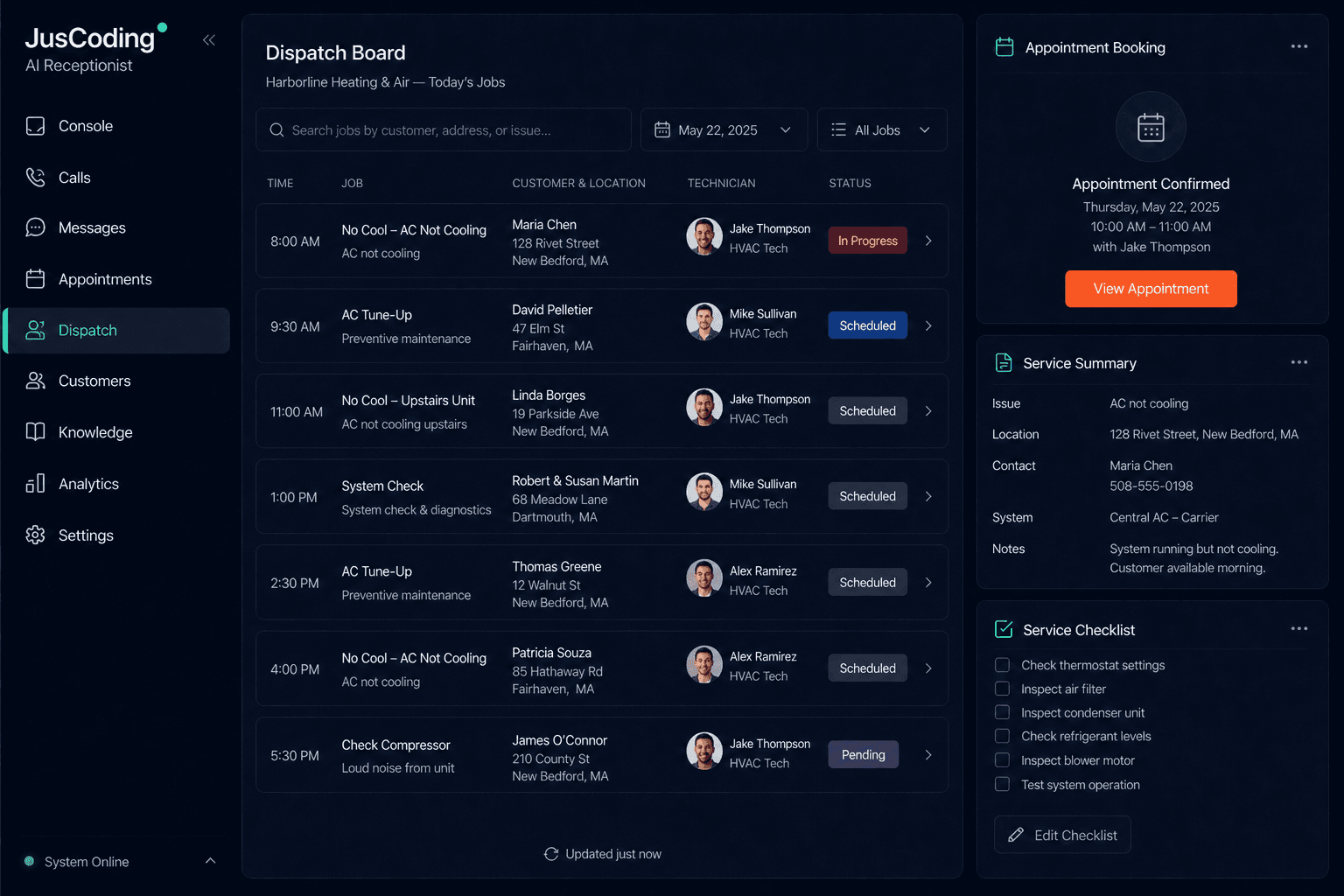
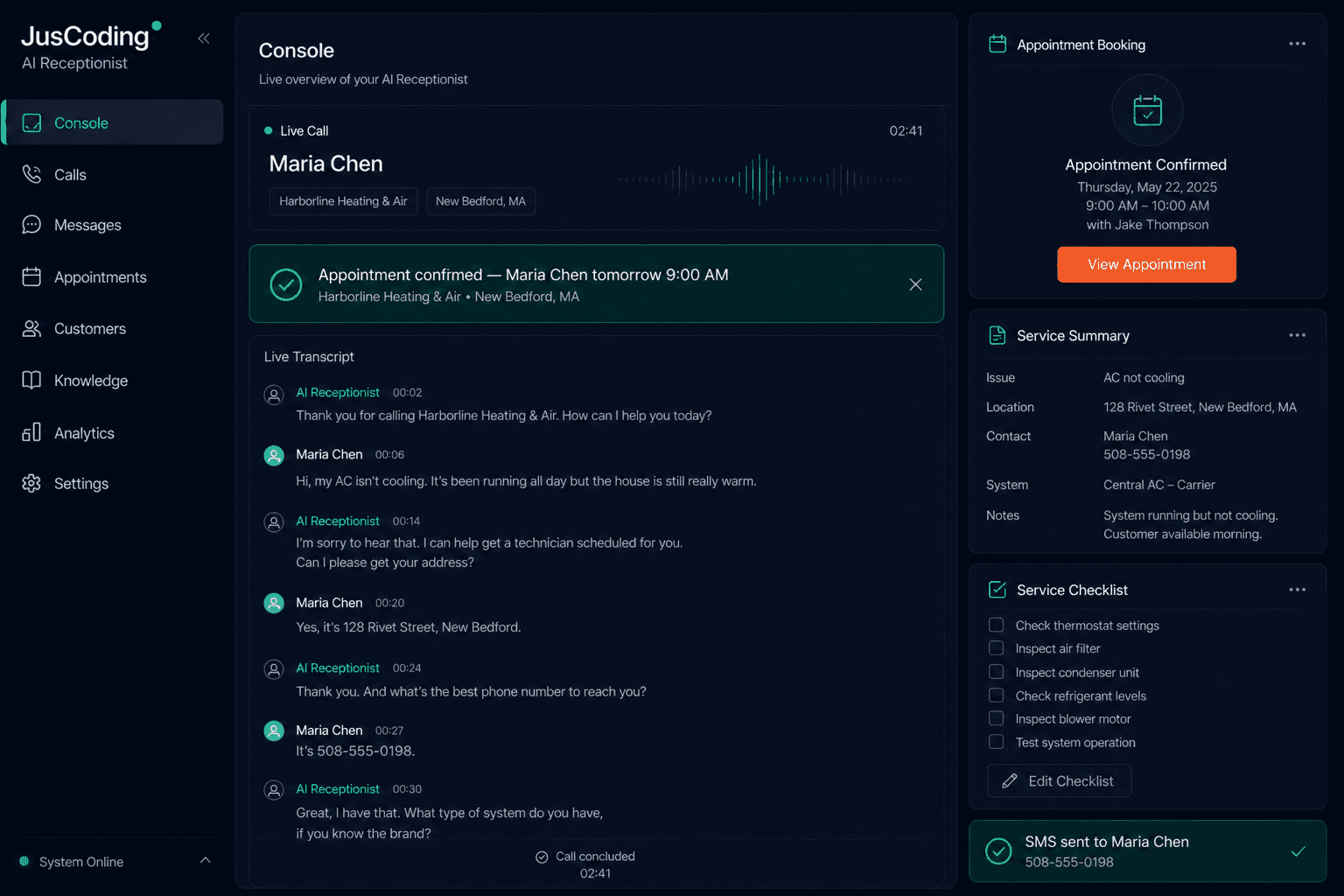
A voice AI that answers your phone outside business hours and on weekends. Captures the basics: name, address, system type (furnace, AC, boiler, mini-split), the symptom in the homeowner's own words. Books a same-day or next-day visit if it's not urgent, into your existing scheduler (ServiceTitan, Housecall Pro, Jobber, FieldEdge, Service Fusion). Routes anything that sounds urgent (no heat in winter, water on the floor, gas smell) directly to your on-call tech with the address and symptom already in their pocket.
The system knows the difference between "my AC is making a weird noise" and "we have water coming down through the kitchen ceiling." Most app-stitched no-code receptionists don't.
2. Quote and follow-up automation
Most HVAC sales close on the second or third touch, not the first visit. The closing rate on quote follow-ups handled by a real automation (texts, emails, scheduled callbacks) is roughly 2-3x the rate when follow-up depends on whoever has time that week. The build pulls quotes from your FSM software, schedules the follow-ups based on the system age and quote size, and prompts your team when a real human conversation is the next step.
3. Maintenance plan reactivation
The gold mine most shops ignore. Customers who bought a system from you 2-5 years ago are due for tune-ups, filter changes, and (eventually) replacements. The system pulls them from your CRM, drafts the right outreach by season, and books the recurring service. For a 3-tech shop with a 1,200-customer history, this typically surfaces 25-50 reactivation appointments a quarter that would otherwise stay cold.
How it plays out.
From 4 captured weekend calls to 31. In one heat wave.
Three-tech residential HVAC shop. Owner answered the after-hours line himself, badly, when he could. Most weekends a 60-call backlog of voicemails. The first hot weekend of the season produced exactly 4 booked appointments. Owner estimated 20+ jobs lost that single weekend.
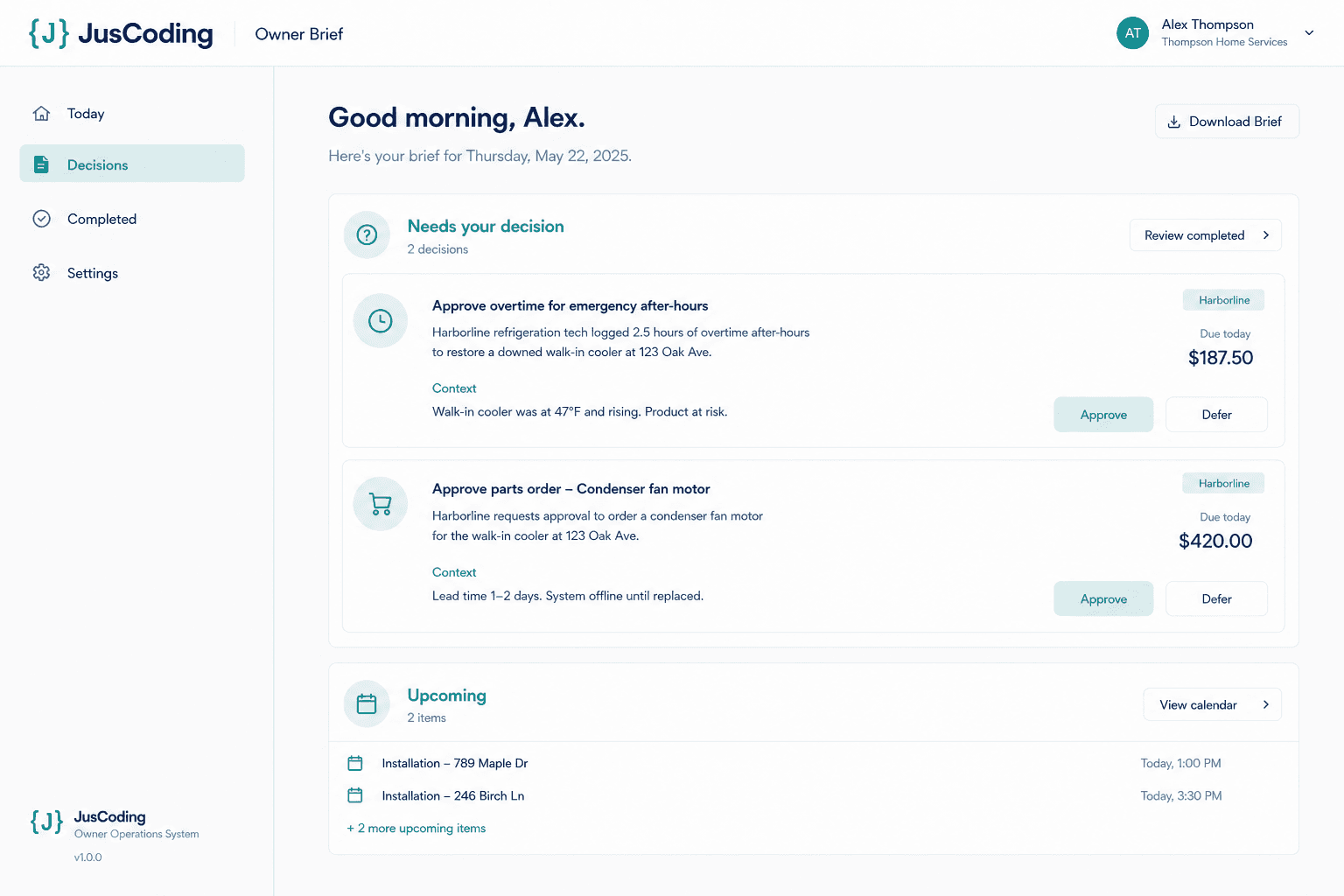
Build: AI receptionist on the after-hours line, integrated with their ServiceTitan. Captures every call with full intake, books non-urgent for Monday morning slots, escalates the no-AC emergencies to the on-call tech with address and system type. Plain-English daily summary email to the owner.
Maintenance plan reactivation surfaces $42K of trailing revenue in Q1.
Two-tech plumbing and heating shop with 1,400 customers in their CRM going back 8 years. Owner suspected there was a pile of overdue tune-ups and aging boilers but never had time to work the list. Tried hiring a part-timer to call through the database. Lasted three weeks.
Build: Operations bot pulls customers by install date and last service, segments by what's likely overdue (boiler tune-up, water heater age, AC service), and drafts seasonal outreach. Owner reviews and approves the list each Monday. Booked appointments flow back into Jobber.
Start with the $200 audit.
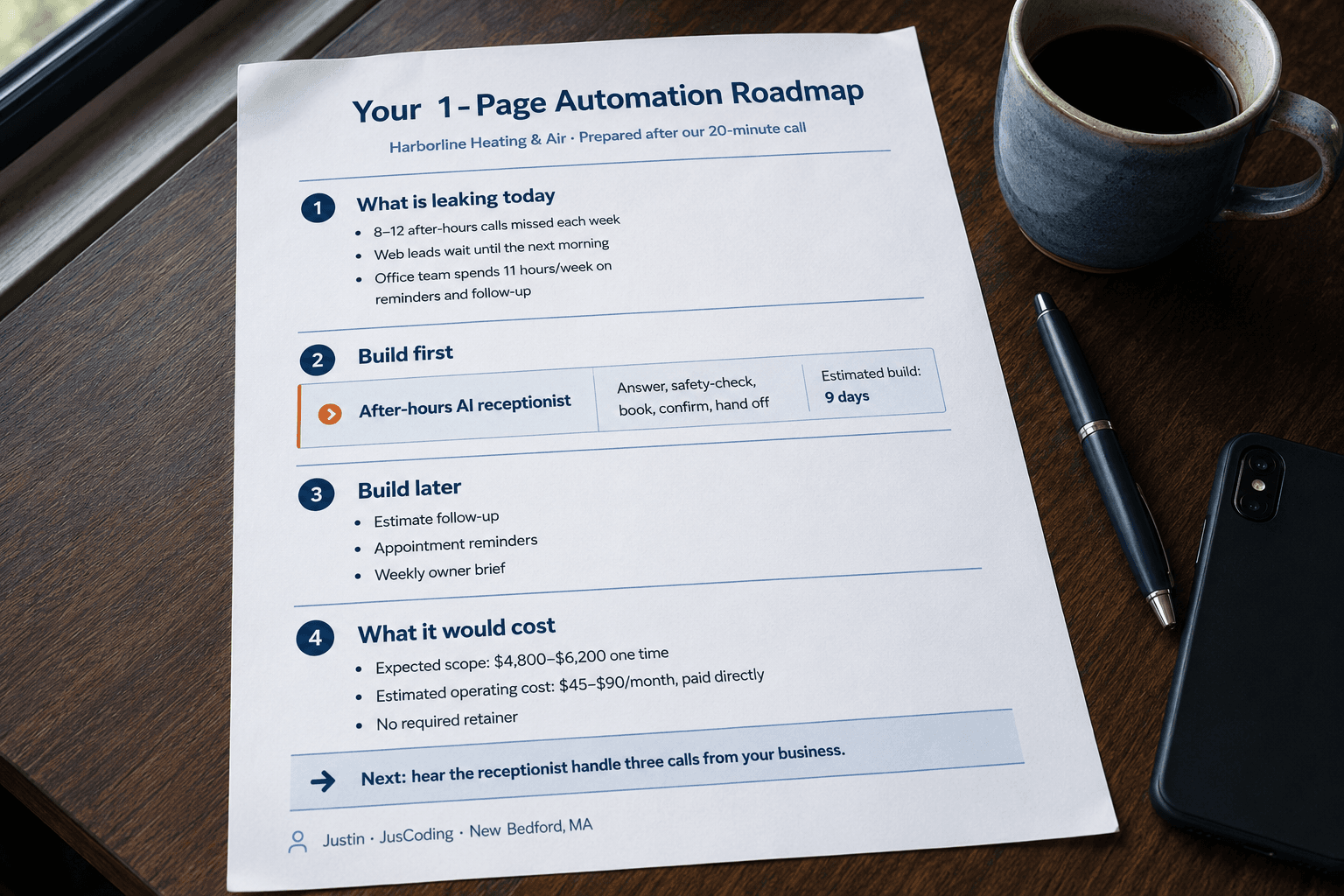
15 minutes describing your shop, your FSM software, and roughly how many weekend or after-hours calls you suspect you're losing. I send back a one-page playbook with what to build, what it'd cost, and a real estimate of monthly recovered revenue. The $200 credits if you hire me.
Book the audit →What it costs.
Shop audit
15-minute call plus written playbook. Real revenue estimate based on your call volume. Credits toward build.
AI receptionist + dispatch
After-hours AI receptionist with dispatch routing. Integrated with your FSM. Live in 10-14 days. 60 days of support.
Receptionist + reactivation
Everything above plus maintenance plan reactivation outreach. For shops with 800+ customer history and an underused recurring-service base.
Subscription AI receptionists for HVAC ($299-$799/month) cost more than a custom build inside 12 months and lock you into their feature set. The math is broken out here.
The app-stitching warning.
Half the "AI for HVAC" pitches landing in your inbox right now are agencies stitching Make.com, Twilio, and OpenAI together with no-code glue, then quoting you $4,500 plus a $300/month "maintenance fee." That setup tends to break inside 90 days. Specifically, it broke for a wave of HVAC shops in August 2025, when Make.com switched its pricing from operations to credits and bumped overage packs roughly 25%. There's a whole article on the pattern.
The version I build is custom code. Direct API calls. No middlemen. Deployed to your Twilio, your ServiceTitan, your accounts. If I disappear tomorrow, the system keeps working and you can hand the code to any developer.
FAQs from shop owners.
Will it work with ServiceTitan, Housecall Pro, or Jobber?
Yes. All three have APIs. Same for FieldEdge and Service Fusion. The build creates jobs in your existing system; you don't need to learn anything new. The audit confirms the integration path.
What about emergencies?
The system is trained on emergency language (no heat in winter, water on the floor, gas smell, no AC during heat wave) and routes immediately to your on-call tech with the address and symptom captured. No homeowner gets stuck with the AI when it is actually urgent.
Will it stop me from getting calls at midnight?
Up to you. The system can take messages for non-urgent calls and only escalate true emergencies. If you want everything routed to you overnight, that's an option. Most shops choose the filter setup, which usually cuts middle-of-the-night calls by 70%.
How fast does it pay back?
For most shops missing 30-60 calls per week outside hours, the build pays back in 3-6 weeks. A captured emergency service call is typically worth $400-$1,500 in same-day or next-day revenue. Replacement quotes that close are five figures.
How long until it's live?
10-14 days for most builds. The discovery call includes a working demo. The build itself is 7-10 days. Then 2-4 days of testing with you and your team before it goes live on your real after-hours line.
After-hours residential HVAC missed-call rates: industry surveys of small-shop call data, plus internal benchmarks across SC field service businesses.
Make.com August 2025 pricing change (operations to credits, ~25% overage increase): help.make.com
Book the 20-minute call. I'll demo an HVAC build live.
By the end of the call, you've heard a working version of the AI handling a real "no heat in the kitchen" intake. If it doesn't impress you, you don't hire me. If it does, I quote a flat fee on the call.
Book the call →— Justin, from a converted spare bedroom in New Bedford